
Believing in Elves
Or holding space for the unknown

I published this essay with Orion in December, about my first research trip to study elves in Iceland when I was an undergraduate.
To say that trip reoriented and redirected my life is an understatement. Here’s a little insight into how.
“DO ELVES EXIST?” I ASK.
Belabored breath. Hesitation. My companions, sitting across the small table in an empty seaside café, are unable to say no.
The wind howls, and we clutch our coffee cups. Out the window, a misted bog runs with steaming, sulfuric streams toward the black and beating ocean.
An older man tells us about his mother’s elf friend—a huldukona, “hidden woman,” who’d visit her in dreams to warn her about the future. “They grew up together—my mother on the farm, and the huldukona in the stone,” he chuckles. Then he closes his eyes, leans back, and hums a winding tune.

I WAS A FRESHMAN IN college when I came across a New York Times article about elves blocking road construction in Iceland. Fifty-four percent of Icelanders allegedly believe in them. How do modern Europeans believe in elves? I wondered. Now, here on the island, I have a grant to find out. As though I can. As though belief is mine to wrangle.
“Of course, Icelanders believe there are spirits living in and shaping the rocks,” I jot down as soon as I step off the plane. The sky is heavy white-gray, thick but thin with rain. A lava field twists the ground into shapes my mind can’t wrap around. Humans are dwarfed by this landscape; towns look like children’s toys against the mountains, volcanoes, and cliffs. This island is still creating itself. I gape, trying to see it.
“Magical,” I write.
I have no idea how much I wanted to be enchanted, to be subsumed.
I ride a rickety bike from Reykjavík to Hafnarfjörður, pedaling against wind. I’ve only lived in cities and have never seen so much vast space to get lost in. Mountains loom and white-tipped waves crash. Winds threaten to bowl me over.
Soft-spoken and thoughtful, Ragnhildur protects elves from road construction and leads tours in a small park in Hafnarfjörður, where she grew up. One day, when Ragnhildur was two, she cried, “Pulda is outside!” after her mother shut the front door. So her mother opened the door for someone she could not see, accepting what her daughter could. To this day, Ragnhildur and Pulda remain friends. “She is of a species we call huldufólk, or hidden people,” she says. “They live in the elf world, and they’re very similar to us.”
Ragnhildur takes gentle pride in her role as emissary, guiding us through the park, connecting seen and unseen, never trying to convince us what to believe. We listen, quiet, reverent. She points to a boulder that rises from nowhere in the glade and tells us it’s an apartment where various hidden beings live in overlapping worlds.
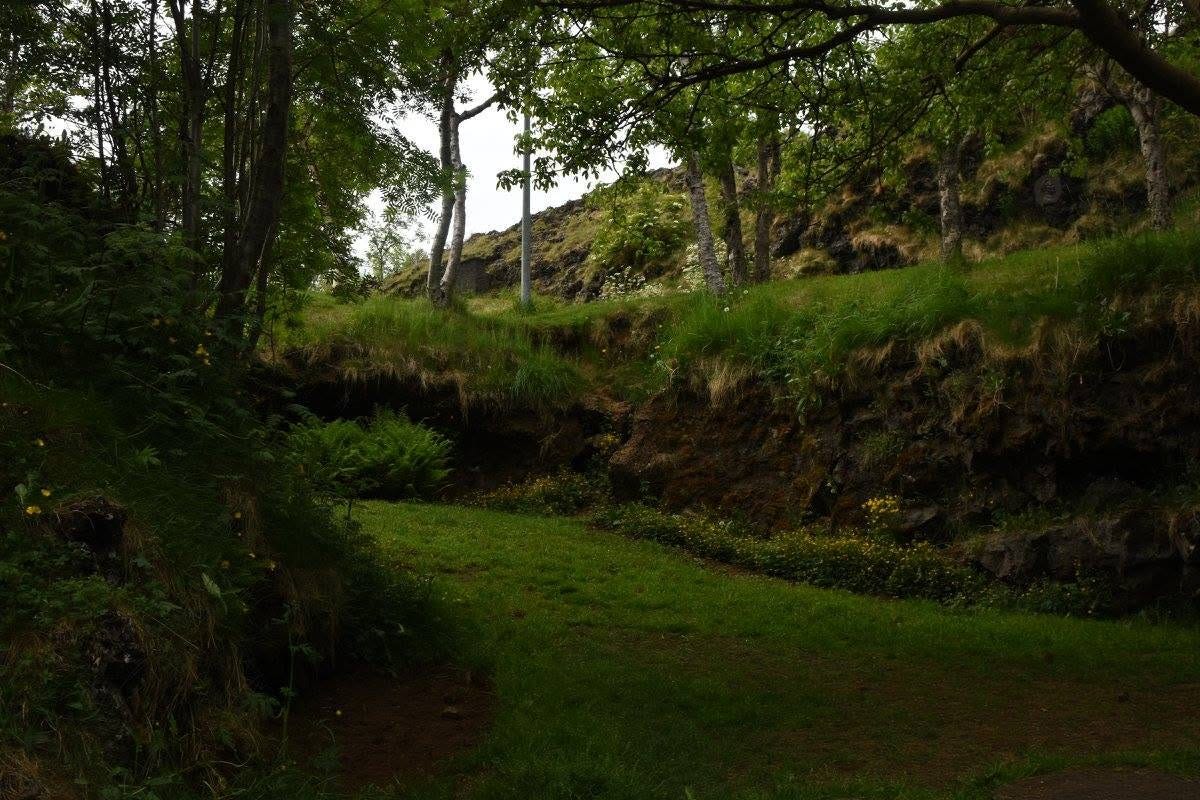
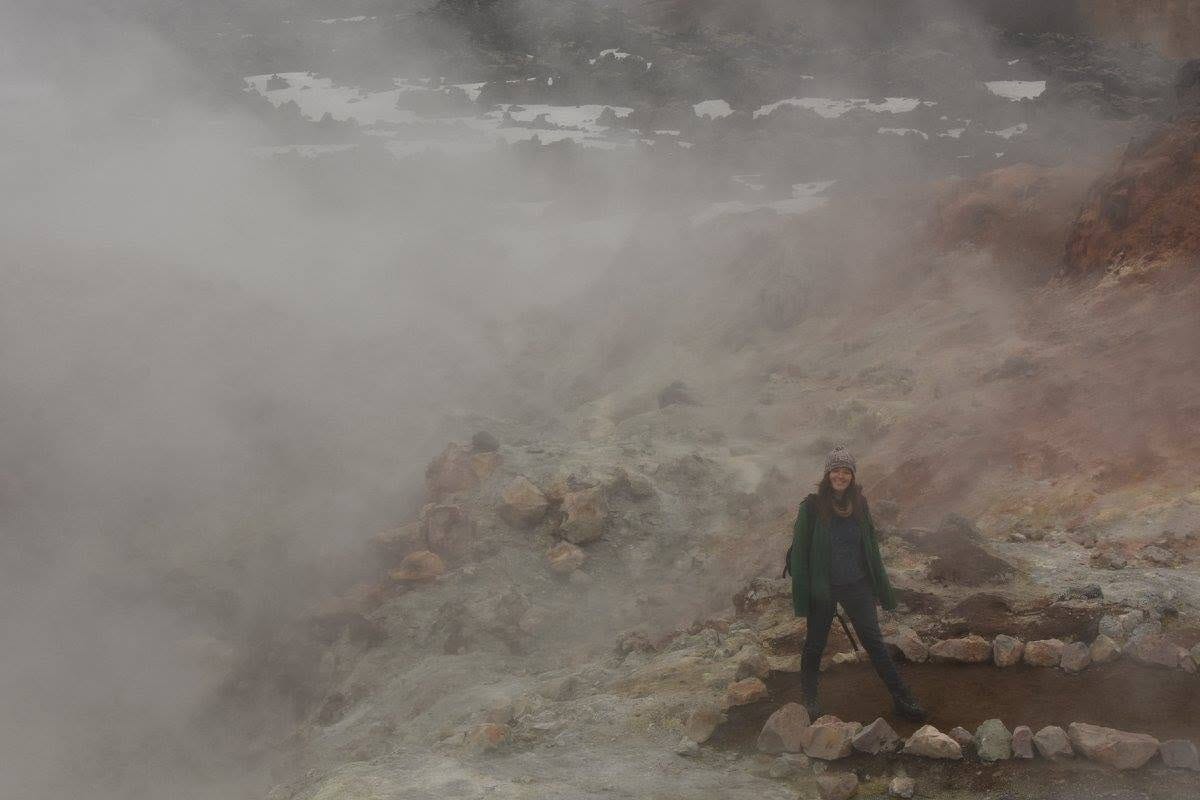
I FOLLOW AN ELVEN trail of breadcrumbs from villages to fjords, museums to parks to grandmothers’ living rooms. I talk to everyone I can: members of the Icelandic paranormal society; the curator of a major Reykjavík museum; a man taking a drag on the street; the head of communications for the Icelandic Road and Coastal Administration; people living near elf stones. I hitchhike from bubbling geysers to pregnant volcanoes to a glacier I’m told holds the most powerful energy. I hopscotch bogs and dodge attacking arctic terns to knock on doors and ask about hidden worlds.
And I am invited in. Faces light up; smiles glint. Everyone wants to talk about elves. They love to turn the questions back, unraveling me rather than the other way around. “Do they not exist?” asks a pagan priestess, rolling a cigarette under the midnight sun.
Belief cannot be wrangled. “Oh no, I don’t believe in elves,” they say, and then, “but my brother sees elves, and I believe him. He’s not crazy or anything.”
One does not have to believe to hold space for the unknown.
A man leaves his birthday party to show me a nearby elf stone. When construction workers tried to damage or move it, the town was set on fire. The man’s father, a construction worker himself, raised him to believe in elves and to respect nature.
A Pentecostal pastor’s congregants huddle around as though the interview is a talk show. For their sake, perhaps, he tries to cast the elves as satanic but, in the end, cannot. He admits he must pass these stories along to his children, that to do so is to be Icelandic.
It’s an island of stories, an inheritance of sagas. In the long winter nights before televisions, farmworkers would gather in the baðstofa, a communal space, warm and dry, as the winds howled outside, and stories would illuminate the dark. Icelanders still share stories, pointing out elf homes to children and grandchildren as they drive along the new roads. “The elves are everywhere,” says a bus driver in the Westfjords. He’s been driving the same route for thirty years and has “never felt alone.”
“Just open up,” urges a grandmother, for whom “sometimes the veil lifts.” Her grandson drives me to an intersection, telling me how he saw “luminous beings” when he was young, until his father died and he needed to take the reins at home. “I think you can’t see them if you’re too focused on something.”
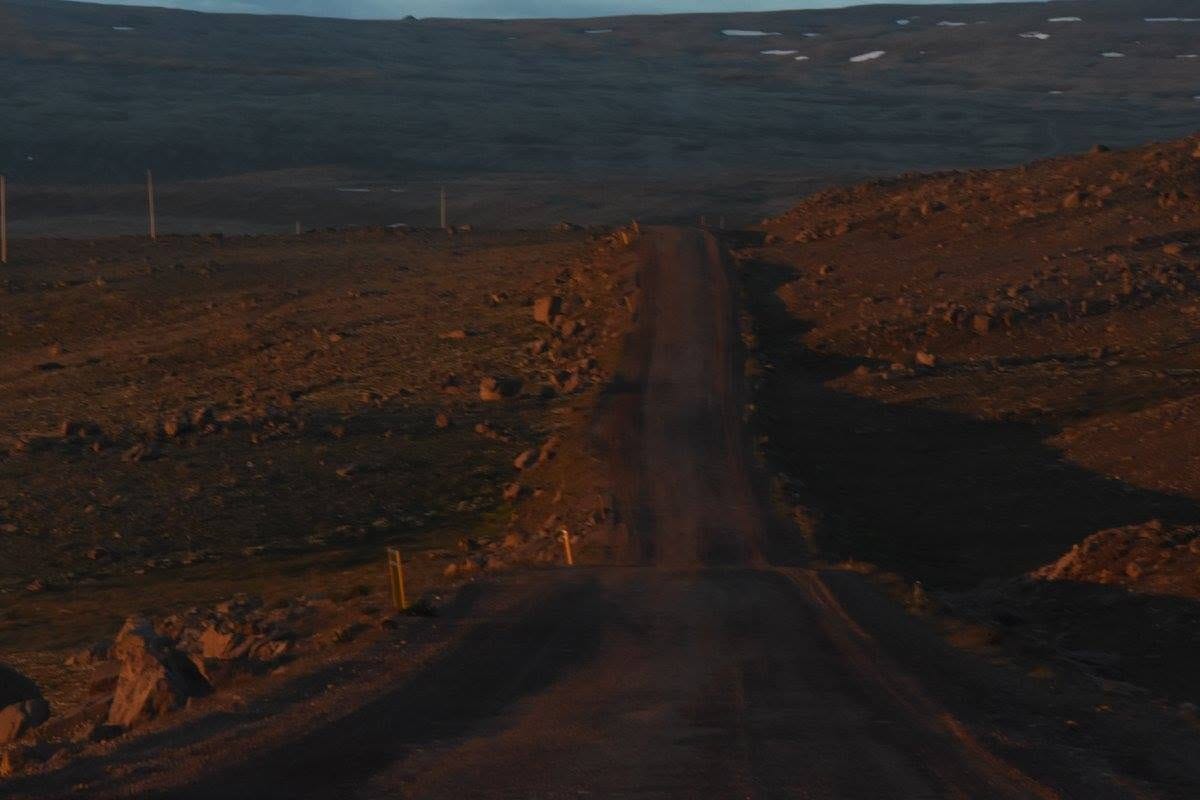
I WALK OUT INTO A LAVA FIELD. I soften my gaze. I feel elves everywhere. It could be my imagination. Or it could be a world I haven’t yet learned to hold.
There have always been mystical mediators of the seen and unseen, human and more than, here and beyond. Not just Icelandic huldufólk but patupaiarehe in Aotearoa’s misty forests, Cree memegwesi between rapids and rocks, Japanese kami where awe is felt in nature, shape-shifting Arabic jinn. Maybe it’s time to once again acknowledge that ours is not the only world.
Maybe the elves can help.
This article originally appeared in Orion.
For a long dive into the fruit of such research, check out my essay with Perspectiva. It shares these opening and closing scenes, but in between is the “new genre of academic fairy story” that this work led me into.
To read “what happened next,” how it felt to fly to New York and go back to school after this trip, here’s a next chapter of sorts.
"One does not have to believe to hold space for the unknown" refuses the false choice most people think they're required to make. Belief and disbelief both claim to have settled something. Holding space settles nothing and asks nothing to be settled, which turns out to be more honest about what's actually known than either confident position manages.